The girl at the center of empire
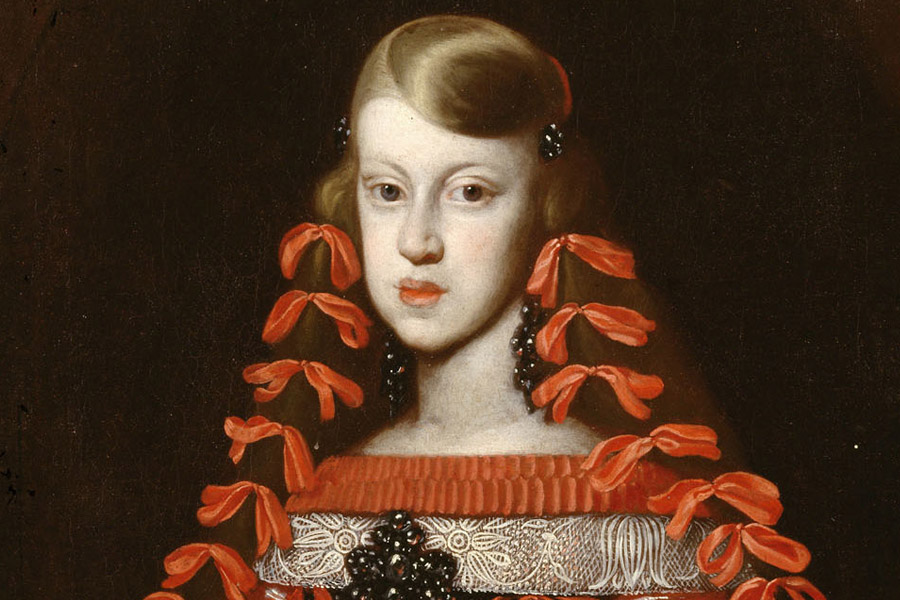
I think of Margaret Theresa Of Spain as a life lived under a magnifying glass. She was born on 12 July 1651 in Madrid, inside the Royal Alcázar, and from the first day her existence carried the weight of dynasties. She was not just a child. She was a diplomatic bridge, a symbol of succession, and a luminous piece on a chessboard where kings, queens, emperors, and courtiers moved with icy care.
Her world was the Spanish Habsburg court, a place of velvet, ritual, painted silence, and constant anxiety over heirs. Margaret Theresa was the daughter of Philip IV of Spain and Mariana of Austria. That alone made her important. But importance was only the beginning. She was also the sister of Charles II, the famous and fragile last Habsburg king of Spain, and the older full sister of Maria Theresa of Spain, who became Queen of France. Her family was a web of alliances, losses, and political bets placed against time.
Her parents, Philip IV of Spain and Mariana of Austria
Philip IV of Spain was Margaret Theresa’s father, and he ruled at a moment when Spain still looked grand from a distance, even as strain was gathering beneath the surface. He was a patron of art, court ceremony, and image. I see him as a ruler who understood that power is often staged before it is felt.
Mariana of Austria was her mother, and also her father’s niece. That detail matters, because it reveals the Habsburg habit of marrying within the family to preserve power. Mariana was young compared with Philip IV, and her marriage was designed to secure the succession after earlier losses had shaken the royal line. She gave birth to several children, but only a few survived long enough to matter in court politics. Margaret Theresa was her first surviving child.
The bond between Philip IV and Mariana was more than a marriage. It was a dynastic machine. Their children were born into a family already carrying the burden of empire, and Margaret Theresa became one of the brightest pieces it produced.
Her siblings, a house marked by hope and grief
Margaret Theresa’s siblings shaped her life almost as much as her parents did.
Maria Theresa of Spain was her elder full sister. She was the daughter who would later become Queen of France through marriage to Louis XIV. I find her important because she shows how Spanish princesses were used to seal political seams across Europe. She was not just a sister. She was diplomacy in silk.
Balthasar Charles, Prince of Asturias, was Margaret Theresa’s older half-brother from Philip IV’s first marriage. His death in 1646 had already left a shadow over the Spanish succession before Margaret was even born. His absence mattered because it sharpened the need for new heirs. In dynastic families, an empty cradle can change the map of Europe.
Maria Ambrosia de la Concepción Enriqueta Teresa was one of Margaret’s younger full siblings, but she died after only a short life. That kind of loss was tragically common in royal households, yet it never became ordinary. Every infant death was another crack in the family wall.
Philip Prospero, born in 1657, was a younger brother who briefly carried the future of Spain. He died young, and for a time Margaret Theresa again stood close to the line of succession. Then Charles II survived, and the role shifted once more.
Ferdinand Thomas Charles was another younger brother who died in infancy. He is one of the many royal children history nearly forgets, but he belonged to the emotional weather of the family all the same.
Charles II of Spain was her younger full brother and the most consequential of the siblings. He lived to become king, but his fragile health made his reign tragic and politically explosive. His existence shaped European history far beyond the walls of Spain. He was the living proof that dynastic survival is not the same as dynastic strength.
Leopold I, husband and imperial counterpart
Margaret Theresa’s marriage to Leopold I was a major life event. Leopold was her maternal uncle and paternal cousin as well as Holy Roman Emperor. That relationship may seem shocking today, but in her society it was political math.
The marriage strengthened Habsburg control in Spain and Austria. She married Leopold at Vienna on 12 December 1666 after marrying by proxy in Madrid on 25 April 1666. Her age was fifteen. The demands of power had altered him as he aged.
I find their marriage intriguing since it seems sincere. Court chronicles reflect warmth, common interests, and closeness that royal marriages did not always ensure. While not eliminating politics, it lends the story a human touch. Not just exchanged between courts. She joined a household that valued her personally and politically.
Maria Antonia of Austria, her only surviving child
Margaret Theresa’s only child to survive infancy was Maria Antonia of Austria, born on 18 January 1669. She became the crucial link through which Margaret Theresa’s Spanish bloodline continued into the next generation.
Maria Antonia later married Maximilian II Emanuel, Elector of Bavaria. That marriage turned her into a key figure in later succession politics. She was not just a daughter. She was a vessel of claims, a living continuation of Habsburg inheritance.
Through Maria Antonia came three grandchildren:
Joseph Ferdinand of Bavaria,
Leopold Ferdinand of Bavaria,
and Anton of Bavaria.
Leopold Ferdinand and Anton died at birth. Joseph Ferdinand survived into childhood and briefly became one of the most important dynastic figures in Europe, because his claim to Spain made him a possible solution to a continent-sized inheritance crisis. That hope did not last, but it shows how far Margaret Theresa’s family influence extended after her death.
Life at court, image, ritual, and fragility
Margaret Theresa lived in a court that loved show. Velázquez painted her repeatedly as a youngster, and those paintings still retain a paused breath. She emerges as a petite, dignified figure between innocence and ceremonial formality.
Her life is full of ceremony. Her birthday was lavishly feted at court. Her arrival in Vienna was a state occasion. Imperial theater included her clothes, attendants, household, and illness. Despite the gold thread and pomp, fragility existed. She was pregnant multiple times. Some kids perished young. She died aged twenty-one on March 12, 1673, pregnant again.
That fast ending feels cruel. Her bright, short life burned like a candle in a drafty hall.
An extended family shaped by succession
The story of Margaret Theresa is impossible to separate from her family.
Philip IV and Mariana of Austria gave her birth and rank.
Maria Theresa of Spain connected Spain to France.
Balthasar Charles and Philip Prospero showed how quickly heirs could vanish.
Charles II carried the Spanish crown into decline.
Leopold I tied her to the Holy Roman Empire.
Maria Antonia of Austria carried her line forward.
Joseph Ferdinand of Bavaria briefly carried the future of Spain in his small hands.
This was a family of crowns, marriages, funerals, and hopes that kept colliding with mortality. It was a royal house, yes, but it was also a house of repeated grief. In that sense, Margaret Theresa was not an exception. She was the clearest expression of it.
FAQ
Who was Margaret Theresa Of Spain?
Margaret Theresa Of Spain was a Spanish Habsburg princess born in 1651. She became Holy Roman Empress through her marriage to Leopold I. She is also remembered as a central figure in court portraiture and dynastic politics.
Who were Margaret Theresa Of Spain’s parents?
Her parents were Philip IV of Spain and Mariana of Austria. Their marriage strengthened the Habsburg line, and their children were central to the Spanish succession crisis.
Who were Margaret Theresa Of Spain’s siblings?
Her siblings included Maria Theresa of Spain, Balthasar Charles, Prince of Asturias, Maria Ambrosia de la Concepción Enriqueta Teresa, Philip Prospero, Ferdinand Thomas Charles, and Charles II of Spain. Some died in childhood, while others shaped European politics.
Who was Margaret Theresa Of Spain’s husband?
Her husband was Leopold I, Holy Roman Emperor. Their marriage joined the Spanish and Austrian Habsburg branches and had both political and personal significance.
Did Margaret Theresa Of Spain have children?
Yes. Her only child to survive infancy was Maria Antonia of Austria. Through Maria Antonia, Margaret Theresa’s bloodline continued into Bavaria and the later succession struggle.
Why is Margaret Theresa Of Spain still remembered?
She is remembered because her life connected major European dynasties, because she appears prominently in art, and because her family influenced the succession politics of Spain, Austria, France, and Bavaria.
How To Keep Your Homes Curb Appeal Free From Bird Damage
How The Right Safety Helmet Helps Prevent Serious Workplace Injuries
The Multi Destination Travel Hack Eliminating Inter Island Transit Friction