Early Roots and Immigration Journey
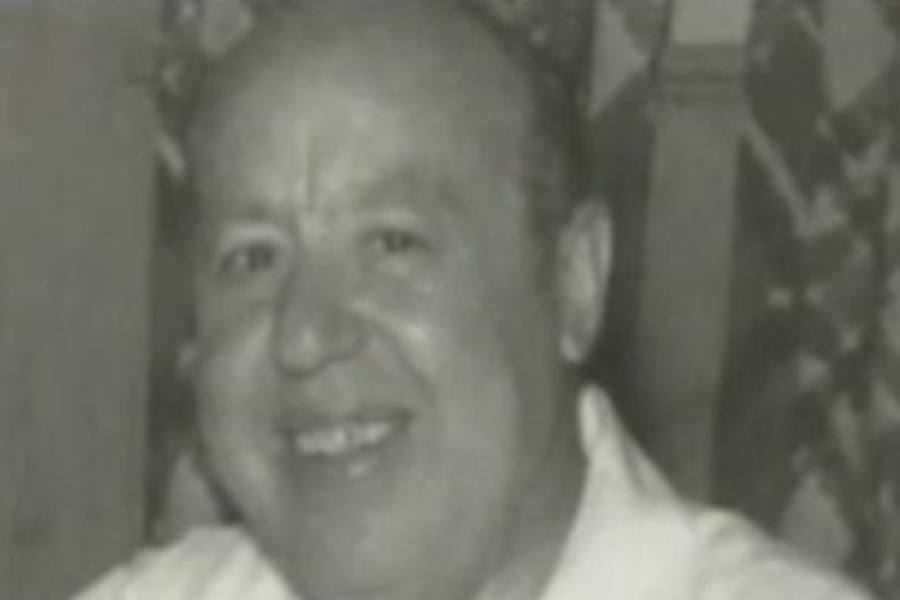
I often think of William J. Silberman as a sturdy oak transplanted from distant soil, his roots delving deep into American earth while branches reached toward new horizons. Born on May 8, 1900, in the small town of Stepan within the Rivne region of what was then the Russian Empire now Ukraine, he entered a world shadowed by uncertainty. His parents, Max Silberman and Rose Luria, navigated the turbulent waves of pre-revolutionary Russia, a place rife with pogroms and economic strife that pushed many Jewish families toward distant shores.
At just 12 years old, in 1912, William embarked on a transformative voyage. He immigrated to the United States, likely passing through the bustling gates of Ellis Island amid crowds of hopeful newcomers. This move mirrored the Great Migration of Eastern European Jews between 1880 and 1924, a human tide fleeing persecution for promises of freedom and opportunity. Settling in Milwaukee, Wisconsin, a city humming with industrial energy and a growing Jewish community, William anglicized his birth name, Velvel Jacob Silberman, to the more assimilable William J. Silberman. Short sentences capture the essence: He arrived. He adapted. He built.
Life in Milwaukee unfolded in modest rhythms. By the 1920s, he had woven himself into the fabric of American society, embracing the Orthodox Jewish traditions that anchored his family. The city’s Sherman Park neighborhood became his haven, a working-class enclave where streets buzzed with the sounds of daily labor and community gatherings. Here, William’s story began to intertwine with others, forming the tapestry of a life marked by quiet perseverance rather than grand spectacles.
Marriage and Building a Family
Love entered William’s world in the late 1920s when he married Jeanne Baer. She, born around 1908 in Chicago, Illinois, to Russian Jewish immigrants, brought her own resilient spirit to their union. Together, they embodied the immigrant dream, blending old-world customs with new-world ambitions. Their home on N 44th Street in Milwaukee’s Ward 26 pulsed with the warmth of family life, as documented in the 1940 census: a household of four, sustained by William’s steady income.
Their first child, Corinne Ruth Silberman, arrived in the early 1930s. She grew into a vibrant soul, her passion for acting igniting like a spark in dry tinder. Corinne’s influence rippled through the family, particularly on her younger brother. On June 11, 1933, Jerome Silberman entered the world, a boy whose boundless energy would one day captivate audiences worldwide. The siblings attended local schools Garden Homes, Sherman, and Washington High forging bonds amid Milwaukee’s educational corridors.
Challenges tested their unity in the 1940s when Jeanne battled rheumatic fever. This illness, a silent storm ravaging her health, left indelible marks. A doctor’s simple advice to young Jerome “make her laugh” planted seeds of comedy in his heart, seeds that would bloom into a legendary career. William stood as the family’s pillar, balancing work and care with unyielding resolve. The 1950 census paints a picture of continuity: the family intact, William still at the helm of his novelty business.
Extended family threads enriched this core. William’s siblings Harry, Morris, Judith, Frank, and Gertrude scattered across the U.S., each carrying fragments of their shared Russian heritage. Through Corinne’s marriage to Gilbert Pearlman, the family expanded further, welcoming nephews like Jordan Walker-Pearlman, who later forged his own path in filmmaking and maintained close ties with Jerome.
Career Path and Daily Endeavors
William’s career ran smoothly in Milwaukee’s entrepreneurial scene. He made and sold miniature whiskey and beer bottles and other mementos. He made a living importing and selling oddities in the post-Prohibition market. His modest business gave stability and a middle-class existence in a neighborhood full with small businesses.
Census records show that William earned enough to feed his increasing family by 1940. He succeeded via steady business and family provision, not patents or accolades. He started from scratch, importing American consumerist items. Tiny glass bottles, perhaps glinting under shop lights, symbolize his resourcefulness in a competitive sector.
This career reflected immigrant narratives, where adaptation outweighed official awards. William likely worked in an office and made sales calls, following Orthodox ethics. He persevered through economic ups and downs, including the Great Depression, to give his children more possibilities.
Legacy Through Descendants
Jerome’s transformation into Gene Wilder in 1959 marked a pivotal shift, his stage name a bridge to stardom. Yet William’s influence lingered, a quiet undercurrent in Gene’s humorous genius. Corinne, too, pursued acting, her early encouragement shaping Gene’s path. She and Gilbert’s family added layers: Their son Jordan, born in the 1960s, became a filmmaker, drawing inspiration from uncle Gene.
Grandchildren extended the lineage. Through Gene’s second marriage to Mary Joan Schutz, he adopted Katharine Wilder, born in the mid-1960s. As William’s grandchild, she represented the generational leap from Ukrainian shtetl to American suburbia. Family dynamics, however, held complexities; estrangements, like Katharine’s later distance from Gene, added shades of gray to the portrait.
William outlived Jeanne, who passed before 1973, witnessing his children’s milestones from afar. His death on May 30, 1973, at age 73, closed a chapter, his resting place at Beth Hamedrosh Hagodel Cemetery in Milwaukee a final nod to his roots.
To visualize the family structure, consider this overview:
| Family Member | Relation to William | Birth Year | Key Notes |
|---|---|---|---|
| Max Silberman | Father | Unknown | Russian immigrant, patriarch. |
| Rose Luria | Mother | Unknown | Anchored family through migration. |
| Jeanne Baer Silberman | Spouse | ~1908 | Battled illness; shaped family resilience. |
| Corinne Silberman Pearlman | Daughter | Early 1930s | Actress; married Gilbert Pearlman; mother to Jordan. |
| Jerome Silberman (Gene Wilder) | Son | 1933 | Comedy icon; adopted Katharine. |
| Katharine Wilder | Grandchild | Mid-1960s | Adopted by Gene; navigated family complexities. |
| Jordan Walker-Pearlman | Grandnephew | 1960s | Filmmaker; close to Gene. |
| Harry Silberman | Brother | Unknown | Part of extended immigrant network. |
| Morris Silberman | Brother | Unknown | Shared Russian heritage. |
| Judith Silberman | Sister | Unknown | Contributed to family diaspora. |
| Frank Silberman | Brother | Unknown | Built life in U.S. |
| Gertrude Silberman | Sister | Unknown | Maintained cultural ties. |
This table captures the web of relations, numbers grounding the narrative in specifics.
Extended Timeline of Milestones
William’s life flows like a river, with each curve a crucial event. After his 1900 birth, immigration in 1912 speeds the timetable. After marriage in the late 1920s, Corinne was born in the early 1930s and Jerome on June 11, 1933.
In the 1940s, Jeanne struggled with World War II’s global effects. 1940 and 1950 census data show stability: The family lived on N 44th Street in 1940, and William’s firm was tiny in 1950.
Jerome’s 1959 name change indicated fame. Before 1973, Jeanne died, leaving William to ponder on shared decades. His death at 73 on May 30, 1973, marked the end.
Posthumously, William appears in Gene tributes from 2016, weaving his legacy into cultural discussions. Dates—1880-1924 migratory wave, 1933 birth, 1973 death—give the story precision.
FAQ
Who was William J. Silberman’s spouse and what was her background?
Jeanne Baer Silberman, born around 1908 in Chicago to Russian Jewish parents, married William in the late 1920s. She embodied immigrant tenacity, raising two children while facing health battles like rheumatic fever in the 1940s. Her influence lingered in family lore, particularly in sparking Jerome’s comedic spark through a doctor’s lighthearted advice.
What were the careers of William’s children?
Corinne pursued acting, her passion influencing Jerome’s early interests; she later focused on family after marrying Gilbert Pearlman. Jerome, known as Gene Wilder, soared in comedy and film, his 1959 name change launching a career filled with iconic roles. Their paths diverged yet echoed William’s entrepreneurial spirit in creative forms.
How did William’s immigration shape his family life?
Arriving in 1912 at age 12, William’s journey from Ukraine to Milwaukee instilled resilience. It fostered a blended identity: Orthodox Jewish practices amid American opportunities. This foundation supported his marriage, business, and children’s pursuits, turning displacement into a bedrock for generational growth.
What role did extended family play in William’s story?
Siblings like Harry, Morris, Judith, Frank, and Gertrude formed a supportive network, scattering across the U.S. while preserving ties. Through Corinne’s lineage, figures like Jordan added modern dimensions, blending film and family. This web amplified William’s quiet legacy, extending from Russian roots to contemporary branches.
How is William remembered today?
In reflections on Gene Wilder’s life, William emerges as the steadfast father whose novelty business and immigrant grit paved paths. Post-2016 tributes highlight his indirect impact on comedy, his story a metaphor for unseen foundations supporting visible stars.